
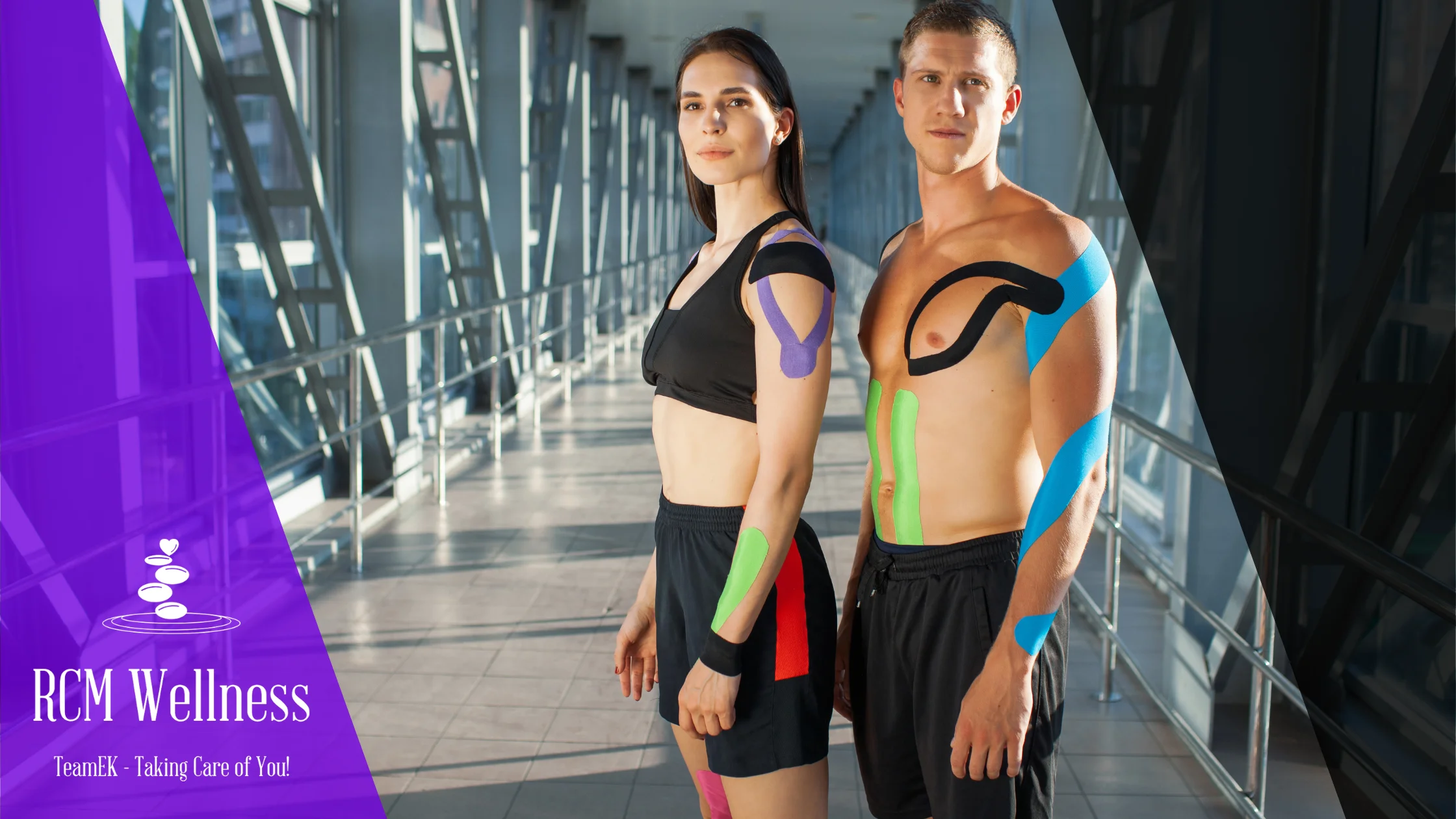
Sports strapping or taping is a common practice in sports medicine to provide support and stability to joints and muscles, prevent injuries, and aid in the rehabilitation of existing injuries. The main goals of sports strapping/taping are to restrict excessive movement, reduce the risk of injury, and enhance the athlete’s performance. Here are some key points about sports strapping:
- Materials Used:
– Adhesive Tape (K Tape): Typically, rigid or elastic adhesive tapes are used. Rigid tapes, such as zinc oxide tape, provide strong support and are often used for joint stabilisation. Elastic tapes, like kinesiology tape, are more flexible and allow for a greater range of motion.
– Underwrap: Some athletes use a thin foam or fabric layer called underwrap before applying the adhesive tape. This helps to protect the skin and provides additional comfort. - Common Techniques:
– Ankle Taping: Used to support the ankle joint, especially in sports that involve a lot of lateral movements.
– Knee Taping: Helps stabilise the knee joint, commonly used in sports with high impact or twisting movements.
– Wrist and Thumb Taping: Provides support to the wrist and thumb joints, often used in sports like basketball and volleyball.
– Shoulder Taping: Helps prevent excessive shoulder movement, commonly used in sports with overhead activities like swimming or throwing. - Prevention and Rehabilitation:
– Preventive Taping: Athletes may use strapping to prevent injuries, especially in areas prone to sprains or strains.
– Rehabilitation Taping: Injured athletes may use taping as part of their rehabilitation process to provide additional support during recovery. - Kinesiology Tape:
– Kinesiology tape is an elastic tape that is designed to mimic the flexibility of human skin. It is often used to support muscles and joints without restricting movement.
– Kinesiology tape is believed to promote blood circulation, reduce pain, and enhance proprioception (awareness of body position). - Professional Application:
– Proper application of sports strapping requires knowledge and skill. Athletic trainers, physiotherapists, or sports medicine professionals often perform the taping to ensure it is done correctly. - Duration of Use:
– Taping is usually applied before a sports activity and removed afterward. The duration of use depends on the individual’s needs and the specific circumstances.
It’s essential to note that while sports strapping can be beneficial, it’s not a cure-all, and athletes should also focus on strengthening and conditioning exercises to prevent injuries in the long term. Additionally, individuals with allergies or skin sensitivities should be cautious about the type of tape used. Consulting with a sports medicine professional is advisable for personalised advice and proper taping techniques.