
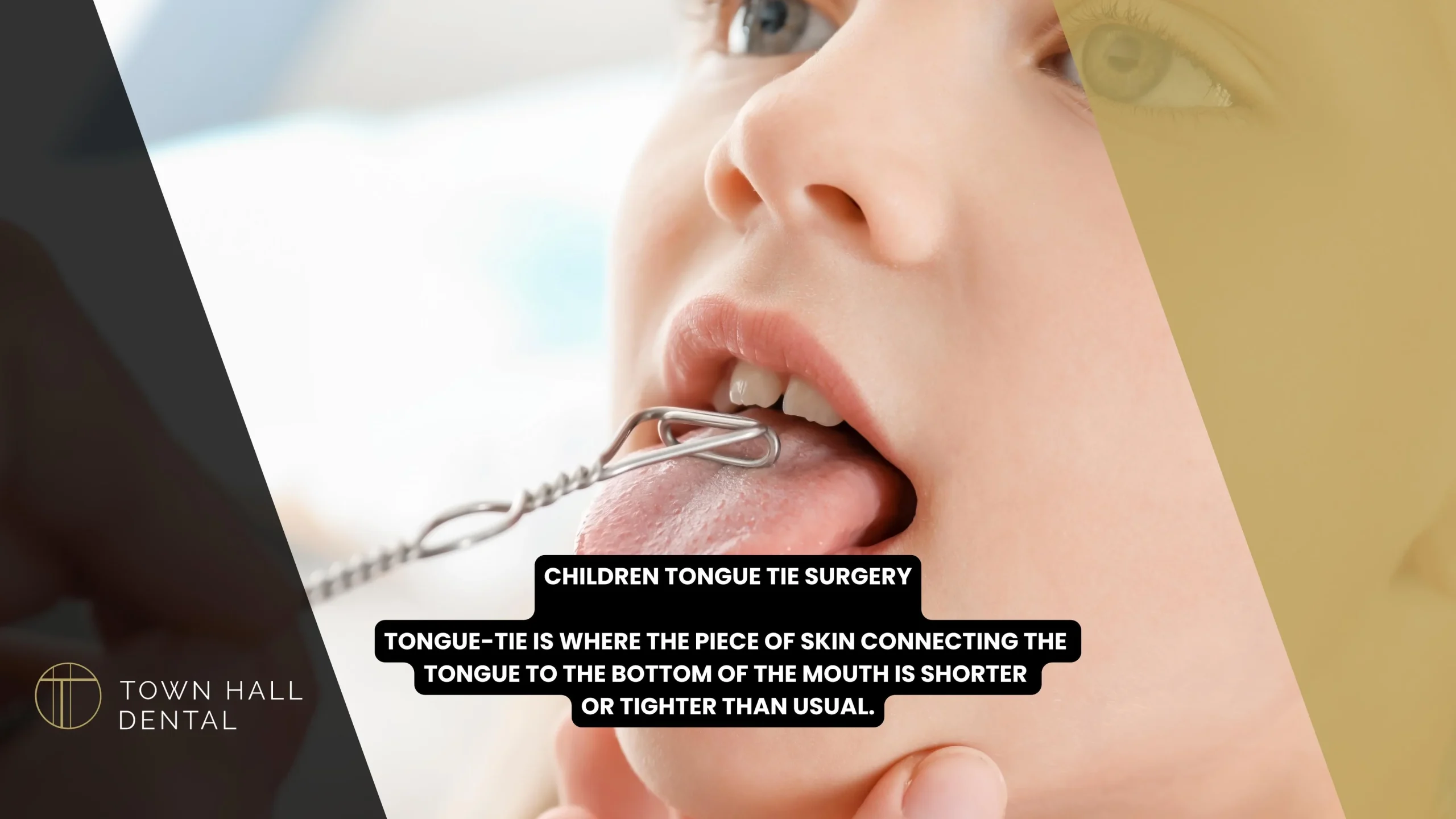
Children’s Tongue Tie Surgery at Town Hall Dental
Understanding Children’s Tongue Tie Surgery
Children’s Tongue Tie Surgery, or ankyloglossia, is a condition present at birth that restricts the tongue’s range of motion. It occurs when the frenulum, the small piece of tissue connecting the underside of the tongue to the floor of the mouth, is too tight or short. This can cause difficulties in breastfeeding, speech development, and oral hygiene in children.
Signs Your Child May Have a Tongue Tie
Common signs of tongue tie in children include:
- Difficulty breastfeeding or bottle feeding
- Speech difficulties or delayed speech development
- Challenges with swallowing or chewing food
- Issues with dental hygiene due to limited tongue mobility
- A visible, tight or thick frenulum under the tongue
If you suspect your child may have a tongue tie, a consultation with one of our specialists at Town Hall Dental can help determine if surgery is necessary.
Benefits of Tongue Tie Surgery
Improved Feeding
For infants, resolving a tongue tie can lead to significant improvements in breastfeeding, allowing for better latch, less discomfort for the mother, and more efficient feeding.
Enhanced Speech Development
As children grow, a tongue tie can impact their ability to articulate certain sounds, leading to speech delays or difficulties. Surgery can help improve tongue mobility, aiding in clearer speech and better language development.
Better Oral Hygiene
Limited tongue movement can make it difficult for a child to clean food debris from their mouth, leading to potential dental issues. By correcting the tongue tie, your child will have better access to all areas of the mouth, promoting better oral hygiene.
The Tongue Tie Surgery Procedure
At Town Hall Dental, we perform tongue tie surgery using a quick and minimally invasive procedure called a frenectomy. This procedure typically takes just a few minutes and can be done using either a laser or traditional surgical methods, depending on the child’s needs.
Laser Frenectomy:
Our advanced laser technology allows for a virtually painless procedure with minimal bleeding and a faster recovery time. The laser precisely releases the frenulum, enhancing tongue movement immediately.
Traditional Frenectomy:
In some cases, a traditional surgical approach using sterile scissors may be recommended. This method is also quick and effective, with local anesthesia used to ensure your child’s comfort.
What to Expect During and After the Procedure
Tongue tie surgery at Town Hall Dental is typically performed on an outpatient basis, meaning your child can go home the same day. The procedure is quick, often completed within 15 minutes, and recovery is usually smooth, with most children experiencing little discomfort.
Post-Surgery Care:
After the procedure, our team will provide you with specific care instructions to ensure a swift recovery. These may include gentle stretching exercises to prevent reattachment and tips on maintaining oral hygiene. Most children can resume normal activities, including feeding, within a few hours.
Why Choose Town Hall Dental for Tongue Tie Surgery?
At Town Hall Dental, we are committed to providing the highest level of care in a child-friendly environment. Our experienced team understands the concerns of parents and ensures that each child receives personalized, compassionate care tailored to their specific needs.
We use the latest techniques and technology to ensure that the procedure is as comfortable and effective as possible. Your child’s health and well-being are our top priorities, and we are here to support you every step of the way.
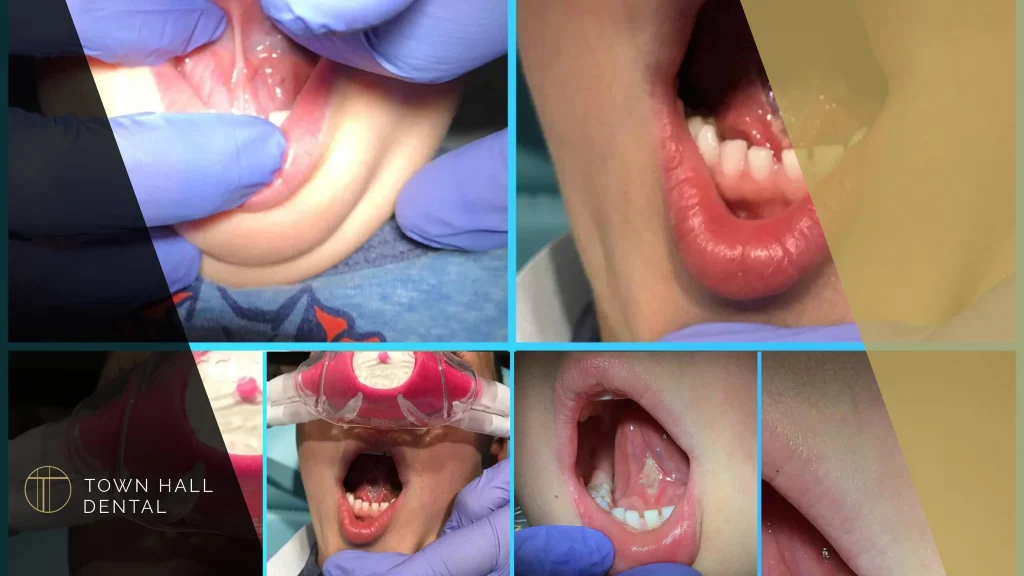
Tongue Tie Release
- A tongue tie release is a quick & simple procedure.
- Most babies show very little distress but may be upset about being wrapped & held firmly.
- The health professional conducting the tongue tie release will lift your tongue and cut its frenulum with a laser or sterile scissors. There should be minimal bleeding.
- Immediately after the release, you will be encouraged to feed your child. You may also be shown a few changes you can make to your breastfeeding routine.
- Most babies have a tongue tie release before they are two months old. If your child is older or has a more complicated tongue tie, a surgeon may need to treat it under general anaesthetic.
What To Expect After The Release?
- Some parents notice a difference immediately after the release, while others require more time to learn about breastfeeding with their baby’s more mobile tongue. Few parents say it makes no difference.
- If your pēpi is older than 2 months, it will likely take a few days to a few weeks before you see the full effect.
- If the feeding problems continue, other problems may affect your baby’s feeding. Your pēpi may need further assessment. Your midwife, doctor, practice nurse, or Well Child Tamariki Ora nurse would follow up to see how you are doing and if you still have problems. They will see what can be done about them.
Schedule A Dental Consultation
If you think your child may benefit from tongue tie surgery, contact Town Hall Dental today to schedule a consultation. Our team is here to answer your questions and guide you through the process, ensuring the best possible outcome for your child.
The tip of your baby’s tongue looks notched or heart-shaped when they stick it out.
They have difficulty sticking their tongue out.
The tip of your kid’s tongue can’t reach the top of their mouth or further than the edge of their lower lip.
They have difficulty moving their tongue from side to side.
- Excessive drooling
- Poor weight gain
- Taking a long time to feed
- Excessive gassiness
Check with a speech and language therapist if more than half of a three-year-old kid’s speech is not understood by people outside the family or if the child has difficulty licking an ice cream cone.
It is possible that latching will be a struggle at first since we would use a small amount of anaesthetic to complete the whole procedure. The numbness will wear off about 30 to 45 minutes afterwards, so do not be alarmed if latching is difficult at first.
Tongue ties can vary in severity and include what we call a “posterior tongue tie”, which may require a few weeks of practice before you see the benefits of the frenectomy.
We recommend being thorough with the prescribed post-treatment exercises and working with a lactation consultant and an osteopath to achieve optimal results and avoid reattachment.
Is your child’s linguistic tongue tie or lip tie causing discomfort or limiting their ability to eat, speak or swallow?
Complete the form or call us to arrange your appointment.
We treat from newborns to teenagers and even adults at our Town Hall Dental clinic for mums and dads.
Book your consultation online here, and we’ll follow up with a questionnaire and consent pack.
Unfortunately, in terms of compliance, we cannot offer full sedation (General Anesthetic) with this kind of Ankyloglossia Treatment. However, in our experience, we have completed many procedures with great success, as the laser procedure is so fast, and our staff is specifically trained to treat children. We also use a topical numbing gel on the Ankyloglossia Treatment area to make it even more comfortable.
We often ask parents to lie in the dental chair with the child in front, your arms across them to help keep them still – we do not pin down or force any treatment without their consent or cooperation.
We can, however, for over 3s, offer Inhalation Sedation, and for over 6s, Intravenous Sedation – this will be planned for on your consultation and booked for another day.
They will not feel the pain, no, as the numbing gel is substantial and works incredibly fast – but of course, it’s not so pleasant for them, and they usually do cry as this feels uncomfortable, and they’ll need to be as still as they can.
The procedure is quick and clean without bleeding – it is scarce, but for older children (5+) a stitch may be required to aid with the healing process.
Complete tissue healing takes 6 weeks, but patients will feel their normal selves within 3-5 days. That means they may be uncomfortable or sensitive for a few days after their Ankyloglossia Treatment.
Yes, they may eat and drink straight after the procedure; just be mindful that they may still be numb, so watch out for biting their cheek or tongue when chewing. Stick to soft food items for the initial 3-5 days—ice cream is perfect for healing!
When massaging, one drop of Vitamin E oil on the treated area can help the healing.
Do NOT exceed 6 hours between stretches; you do not need to wake your child to complete the exercises overnight.
With successful exercises and the efficiency of the laser, re-attachments are very rare. If they do occur, however, the surgeon will notify you, and we may re-release them at your review appointment. We may also ask you to come back after the healing is complete and then re-release them!